Apologies for the long time in between posts. Work's been crazy lately and also for the boxing fans out there, after 5 long years, two guys are going to finally face each other in the ring. Some guys named Manny Pacquiao and Floyd Mayweather, Jr. It's been occupying most of my time the last week or so.
But back to music. I first became acquainted with Ed Sheeran when JM posted this on Twitter: "You could break @edsheeran's talent into about six equal pieces and *still* have six very talented and successful artists." So I checked him out on Google Play, listened to some of his first album, "+", and thought he was cool but very much a modern pop musician.
Then I saw him on the last night of JM's "Late Late Show" episodes and fell in love with "Don't". The Grammys performance of "Thinking Out Loud" sealed it for me. So I went back and listened to "+" again and got hooked. At first I thought "x" wasn't as good in comparison to "+", but after hearing it again with mostly unbiased ears, it's probably even better.
I just started reading Ed's autobiography, and he got a ton of support from his parents, especially his dad, who took him to all these concerts ranging from Eric Clapton to Elton John. He got a freaking 8-track tape recorder one Christmas.
I've ranted about how my dad cares very little for my music and how if my high school actually had a damn music program maybe my life would be different. But you know something? So what.
That's the thing with dreams; they overcome obstacles. They supersede circumstances. Okay, so my family didn't have a lot of money and couldn't afford music lessons. They still encouraged me to sing in church and bought a karaoke machine.
But even if my family were against my musical aspirations as opposed to just being incredibly neutral, if this is my passion then that doesn't matter. JM's parents were opposed to him pursuing a music career (until he got signed by Columbia, then his dad changed his mind), but he didn't care. He kept pushing forward. He worked for a year at a gas station, saving up so he could get that Stevie Ray Vaughan Stratocaster. He worked his ass off for hours either alone in his room or on stage to sharpen his guitar and vocal skills. He went to Berklee long enough to meet Clay Cook and make a demo tape of some of his "Inside Wants Out" tracks and then moved to Atlanta.
Regardless of whether I or anyone else has the backing of our family and friends to pursue our dreams, we need to forge ahead and pursue them. If we have to use our own hard-earned money to buy our own gear, then so be it. I was lucky to have qualified for both an Amazon and Sweetwater store cards so I can at least pay for stuff slowly, but I'm still saving up for my first Fender Strat and other guitars and gear. I'm about to get a used car (which will really help with future gigs, jam sessions, etc.), so I'm trying to get a 2nd job to pay that off and save more money. If you want something badly enough, you'll find a way to make it work.
Saturday, February 28, 2015

Thursday, February 19, 2015
What's the freaking point?
I got to thinking: why do I do all this?
Why am I playing guitar or chatting with people on John Mayer and guitar groups? What do I want to do musically, and why do I want to take classes at my local community colleges and pursuing an associate's in music as well as do live shows and write songs?
As John Mayer said,"I really hunger for that community".
People pursue careers mainly because of money and/or job security. A lot of people have asked why don't I pursue a career in special education since I've been doing it for so long? I just don't like it. It's noble and I respect the folks who have done it for a long time (like my mom), and I work my ass off, but it's not for me.
But I think regardless of what career I or anyone else pursues, it comes down to community. To relationships. I love music, but having people either in my Facebook groups or my everyday life (not that FB isn't everyday life, but you know what I mean) share this passion is what does it for me.
My buddy, Dan, and I are an odd pair musically. Yes, we both like classic rock, blues and jazz, but I'm definitely a child of the 90s, so I enjoy hip-hop, R&B and alternative, while he, pushing 60, is unfamiliar with that. But we can talk guitars and music concepts all day. And the cool part is it's like we're speaking a different language than most others around us.
I got my buddies I talk sports with, others I talk just work and social issues, but my music conversations are really special. My family enjoys music and were responsible for getting me into it in the first place, but we don't talk about it all that much. I'm the only one who listens to rock and blues, and while my sisters and I listen to hip-hop, r&b and pop we have differing tastes in those too. So our music conversations are somewhat limited.
I like the concept of what The Band did where they basically had a fraternity house with a recording studio in their living room. They had a game room, a swimming pool in the back and a den for hanging out, but the living room was full of gear and recording equipment. That's my dream house. Or like what John Mayer did when he recorded "Battle Studies".
Me in a house with recording equipment and just a place to hang out with family and friends and lay down tracks whenever we effing feel like it. That's the life for me. That an a sweet RV.
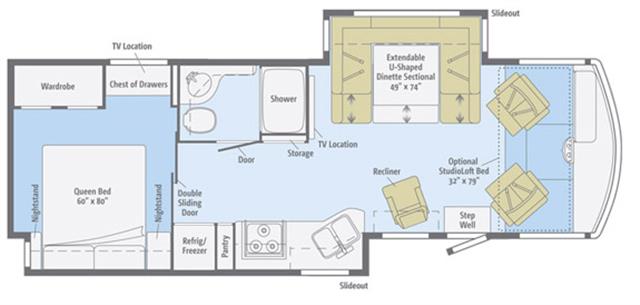
I know JM bought his Earth Roamer for half a mil with his rich-ass self, but this baby's only $118,000 (check out the floor plan):
Itasca Sunova


Bedroom:

Overall floor plan:

Not bad, huh? I like the idea of just cruising around in an RV for weeks at a time, just with an acoustic, or if I want to go electric I can get a portable power supply (don't want to use up the car battery now). Dreams . . .
Why am I playing guitar or chatting with people on John Mayer and guitar groups? What do I want to do musically, and why do I want to take classes at my local community colleges and pursuing an associate's in music as well as do live shows and write songs?
As John Mayer said,"I really hunger for that community".
People pursue careers mainly because of money and/or job security. A lot of people have asked why don't I pursue a career in special education since I've been doing it for so long? I just don't like it. It's noble and I respect the folks who have done it for a long time (like my mom), and I work my ass off, but it's not for me.
But I think regardless of what career I or anyone else pursues, it comes down to community. To relationships. I love music, but having people either in my Facebook groups or my everyday life (not that FB isn't everyday life, but you know what I mean) share this passion is what does it for me.
My buddy, Dan, and I are an odd pair musically. Yes, we both like classic rock, blues and jazz, but I'm definitely a child of the 90s, so I enjoy hip-hop, R&B and alternative, while he, pushing 60, is unfamiliar with that. But we can talk guitars and music concepts all day. And the cool part is it's like we're speaking a different language than most others around us.
I got my buddies I talk sports with, others I talk just work and social issues, but my music conversations are really special. My family enjoys music and were responsible for getting me into it in the first place, but we don't talk about it all that much. I'm the only one who listens to rock and blues, and while my sisters and I listen to hip-hop, r&b and pop we have differing tastes in those too. So our music conversations are somewhat limited.
I like the concept of what The Band did where they basically had a fraternity house with a recording studio in their living room. They had a game room, a swimming pool in the back and a den for hanging out, but the living room was full of gear and recording equipment. That's my dream house. Or like what John Mayer did when he recorded "Battle Studies".
Me in a house with recording equipment and just a place to hang out with family and friends and lay down tracks whenever we effing feel like it. That's the life for me. That an a sweet RV.
I know JM bought his Earth Roamer for half a mil with his rich-ass self, but this baby's only $118,000 (check out the floor plan):
Itasca Sunova
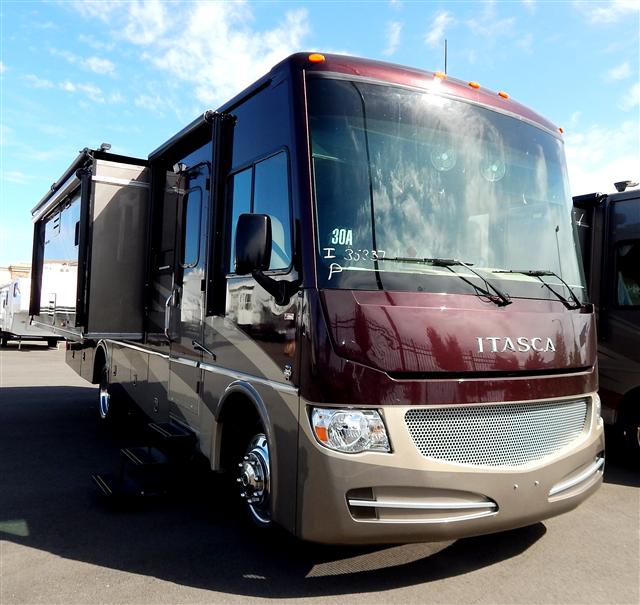
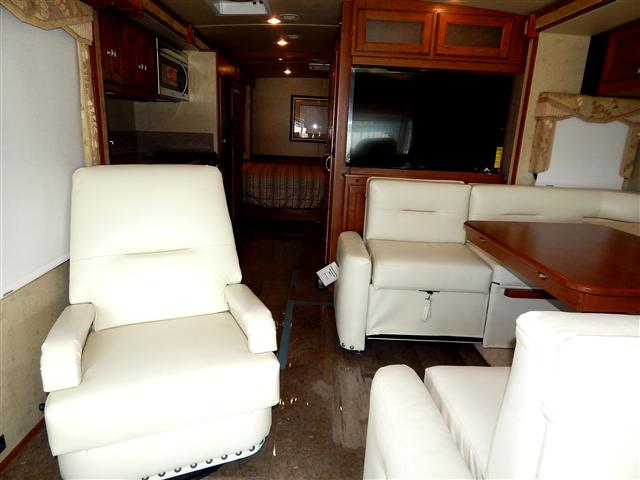
Check out the living area:
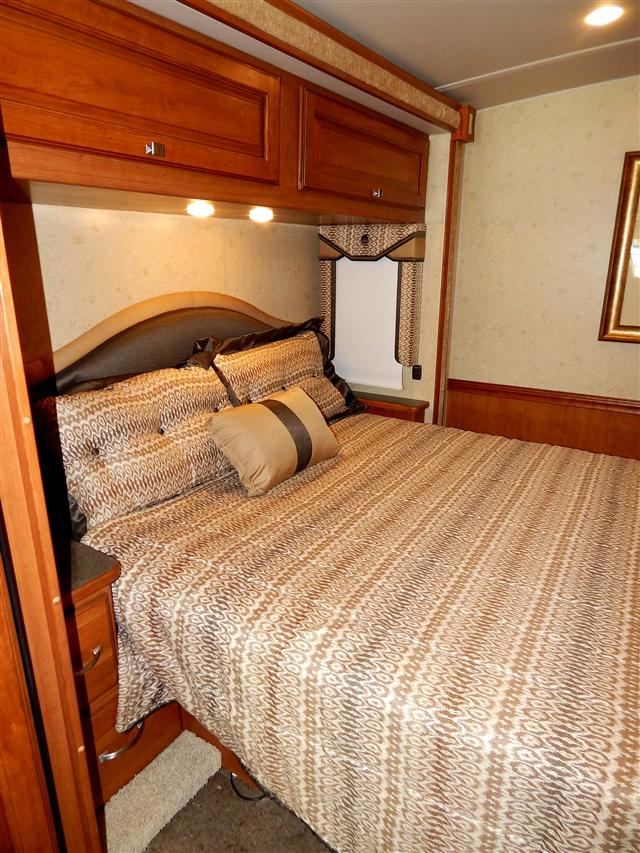
Bedroom:
Overall floor plan:
Not bad, huh? I like the idea of just cruising around in an RV for weeks at a time, just with an acoustic, or if I want to go electric I can get a portable power supply (don't want to use up the car battery now). Dreams . . .
I Am A Poor Boy Too, Pa-Rumpa-Pum-Pum
So a guy in a Facebook guitar page I'm in, "Sixstringers", just posted his rig. Very impressive. Got a huge Fender amp, an American standard Strat, and a nice assortment of pedals, probably totaling at least $1,000.
So what do I have, you wonder?
Guitars:
Sawtooth Strat ($70)
Oscar Schmidt Folk Acoustic-Electric (OG8CE; $180 including gig bag)

Amp:
Vox AC1RV Rhythm Vox ($60)
Pedals:
Zoom G5 ($300)
Boss RC-3 ($200)
Recording:
iPad ($120 used)
Garageband ($5)
Total: $935
That's on a substitute special education teaching assistant salary, BTW. LOL
I was only able to afford the G5 and Rc-3 because I managed to qualify for a Sweetwater Store Card and am paying those off slowly. I do have a lot more gear I'm hoping to get this year, but I'm trying to save for a trip to Hawaii, so I'll have to hold off on a lot of those. Maybe I can spring for another inexpensive guitar and an upgrade to my amp. Of course if I land a job at Guitar Center (fingers crossed) I can get stuff quicker with the employee discount. =)
(No copyright infringement intended with these videos and pictures. Just wanted to showcase the items. Thanks to Anderton's Music in the UK and Sweetwater in the US for making these great videos!)
So what do I have, you wonder?
Guitars:
Sawtooth Strat ($70)
Oscar Schmidt Folk Acoustic-Electric (OG8CE; $180 including gig bag)
Amp:
Vox AC1RV Rhythm Vox ($60)
Pedals:
Zoom G5 ($300)
Boss RC-3 ($200)
Recording:
iPad ($120 used)
Garageband ($5)
Total: $935
That's on a substitute special education teaching assistant salary, BTW. LOL
I was only able to afford the G5 and Rc-3 because I managed to qualify for a Sweetwater Store Card and am paying those off slowly. I do have a lot more gear I'm hoping to get this year, but I'm trying to save for a trip to Hawaii, so I'll have to hold off on a lot of those. Maybe I can spring for another inexpensive guitar and an upgrade to my amp. Of course if I land a job at Guitar Center (fingers crossed) I can get stuff quicker with the employee discount. =)
(No copyright infringement intended with these videos and pictures. Just wanted to showcase the items. Thanks to Anderton's Music in the UK and Sweetwater in the US for making these great videos!)
Wednesday, February 18, 2015
Is This It?
Didn't even give my last post a day to marinate, but just wanted to update that my I posted a link to my blog on my Facebook group, "Sixstringers", and I got some great feedback.
As mentioned, I was going to get into the Gibson Learn and Master guitar series. I already knew about it, but being as stubborn and cocky as I am, I thought I could do better. Turns out I can't. It's structured very logically, and especially with the Bonus Resources book goes through each topic (or "Session", as they call them) in great detail. Can't wait to tackle it.
I'll use other books for reference and as supplements, but for now I'll just focus on the Gibson series. There's DVDs and backing track CDs available, but mainly because I'm cheap I won't get them. The books should be enough material for now. Besides, when I bought the Guitar System, it included streaming videos and I didn't even use those much.
Time to dive in! (photo courtesy of photobucket.com)

As mentioned, I was going to get into the Gibson Learn and Master guitar series. I already knew about it, but being as stubborn and cocky as I am, I thought I could do better. Turns out I can't. It's structured very logically, and especially with the Bonus Resources book goes through each topic (or "Session", as they call them) in great detail. Can't wait to tackle it.
I'll use other books for reference and as supplements, but for now I'll just focus on the Gibson series. There's DVDs and backing track CDs available, but mainly because I'm cheap I won't get them. The books should be enough material for now. Besides, when I bought the Guitar System, it included streaming videos and I didn't even use those much.
Time to dive in! (photo courtesy of photobucket.com)

Guitar learning thoughts, material
(sighs in frustration but also relief)
So as I mentioned in my first blog, I've been struggling with this beautiful instrument, the guitar, for several years. I've spent hundreds of dollars on books and different guitar website subscriptions to learn how to play this damn thing. People have recommended private lessons, and I do know a guy who I can get lessons from at a reasonable price (comparably speaking), but even $40 for an hour's worth of lessons is a bit much. I can pay $15-20 a month for all the lessons I want and I can learn at my own pace.
I guess my problem has been information overload. If I could go back in time to early 2011, when I first committed to this instrument, I would have said,"All you really need is to get your strumming rhythm down and learn chords, including barre chords. Then once you get that down, learn chord/scale relationships and write riffs based on that. Learn some legato techniques (hammer-ons, pull-offs, slides), some bending, and since you already learned scales based on chords, use those to start soloing."
Maybe I'll discuss playing in different positions on the fretboard, but since I've already learned barre chords at different positions it's not really necessary.
Just went through my fifth different guitar method (first I tried Hal Leonard's, then Alfred's, then Mel Bay's, then the Berklee Modern Method, and finally Essential Elements. All the same things: chords, some fingerpicking, scales, and some basic solo techniques. I WANT TO PLAY!!!!!!
My Facebook buddy suggested Gibson's Learn and Master Guitar. I've checked it out a few times, but of course in my immaturity (or delusion) before I was like "Too much work; I want to start shredding NOW!" (I sound like Veruca Salt).
I guess what's held me back is I never really set goals for myself. Like do I want to just be able to play tunes for friends and family or do I want to be a kickass guitar god? More of the latter.
Part of that means I have to WORK. But my brain needs structure. I need a step-by-step program. Some methods start okay and then devolve into some smorgasbord of scales and theory and my brain screams for it to stop.
I've been working on some kind of "guitar syllabus". Maybe I can parlay it into paid lessons. We'll see. But for now it's so I can get a sense of how to play this damn instrument. I found a little $3 book on Kindle by some dude named Justin Kregger who wanted to teach his kids to play guitar. It's titled "How I Taught My Kids To Play Guitar in Less Than One Hour! Using A Single String."
Needs some work on the grammar, but it's an interesting concept. Just using the bottom string (6th string or low E string, whatever you want to call it), he teaches simple melodies. No theory, nothing, just essentially like TAB where he numbers the frets.
It's beautiful in its simplicity.
So after years and all this money spent, I've come down to this (the books are more for reference):
1) Learn melodies string by string in different keys, which involves pitch and rhythm (melodic intervals)
Books:
The Guitarist's Guide to Music Reading (Chris Buono)
Sight-Reading for the Contemporary Guitarist (Tom Dempsey)
Optional:
Hal Leonard Easy Pop Melodies series
2) Learn/integrate harmonic intervals (2-note up to 6-note), and eventually chords
Books:
Sight-Reading for the Contemporary Guitarist (Tom Dempsey)
Optional:
Hal Leonard Easy Pop Rhythms series
3) Learn right and left hand techniques
Books:
Hal Leonard Guitar Techniques (Michael Mueller)
Ultimate Guitar Technique (Bill LaFleur)
4) Learn about chord progressions (theory)
Books:
Idiot's Guide to Music Composition (Michael Miller)
5) Create riffs using melodic and harmonic intervals plus rhythm and techniques
Books:
Riffs (Rikky Rooksby)
6) Learn different styles
Books:
Chord Progressions For Guitar (Tom Kolb)
Hal Leonard Rhythm Riffs (Greg Koch)
Hal Leonard stylistic series
So where's soloing? IMHO, I feel like if you have a good sense of chord-scale relations, techniques and rhythm, lead playing should come somewhat naturally. There's plenty of material on scales out there to brush up, but a lot of soloing is about the ear and feel. Maybe start with a one-note solo, then progress to 2 notes, then 3 notes, etc. The HL style series has books on blues and rock, too, so there should be some soloing tips there.
There's a couple of websites I like: Guitar Tricks, Truefire and Guitar Systems. While they all attempt to create some sort of order, it's all about just picking and choosing what you want to focus on.
I downloaded the Gibson Learn and Master guitar lesson and bonus resources books as reference (you can get them here at: http://www.learnandmaster.com/lessonbook/, just enter your name and e-mail address and it's instant access), but for the most part above is my syllabus.
While it's nice to have some kind of coherence, at the end of the day it's about what you feel like playing. Maybe one week you're on this blues kick, and the next you want to play some rockabilly or country. I guess my whole point in this crazy post is to find your own path. Keep things as simple and straightforward as possible, but leave room for inspiration and don't be afraid to wander down a rabbit trail. Most of all, while it can be work at times, it's all about having effing fun.
In the meantime, here's a video of someone having fun (fast-forward to 3:26; the whole performance is cool, but that solo at the end is EPIC)
So as I mentioned in my first blog, I've been struggling with this beautiful instrument, the guitar, for several years. I've spent hundreds of dollars on books and different guitar website subscriptions to learn how to play this damn thing. People have recommended private lessons, and I do know a guy who I can get lessons from at a reasonable price (comparably speaking), but even $40 for an hour's worth of lessons is a bit much. I can pay $15-20 a month for all the lessons I want and I can learn at my own pace.
I guess my problem has been information overload. If I could go back in time to early 2011, when I first committed to this instrument, I would have said,"All you really need is to get your strumming rhythm down and learn chords, including barre chords. Then once you get that down, learn chord/scale relationships and write riffs based on that. Learn some legato techniques (hammer-ons, pull-offs, slides), some bending, and since you already learned scales based on chords, use those to start soloing."
Maybe I'll discuss playing in different positions on the fretboard, but since I've already learned barre chords at different positions it's not really necessary.
Just went through my fifth different guitar method (first I tried Hal Leonard's, then Alfred's, then Mel Bay's, then the Berklee Modern Method, and finally Essential Elements. All the same things: chords, some fingerpicking, scales, and some basic solo techniques. I WANT TO PLAY!!!!!!
My Facebook buddy suggested Gibson's Learn and Master Guitar. I've checked it out a few times, but of course in my immaturity (or delusion) before I was like "Too much work; I want to start shredding NOW!" (I sound like Veruca Salt).
I guess what's held me back is I never really set goals for myself. Like do I want to just be able to play tunes for friends and family or do I want to be a kickass guitar god? More of the latter.
Part of that means I have to WORK. But my brain needs structure. I need a step-by-step program. Some methods start okay and then devolve into some smorgasbord of scales and theory and my brain screams for it to stop.
I've been working on some kind of "guitar syllabus". Maybe I can parlay it into paid lessons. We'll see. But for now it's so I can get a sense of how to play this damn instrument. I found a little $3 book on Kindle by some dude named Justin Kregger who wanted to teach his kids to play guitar. It's titled "How I Taught My Kids To Play Guitar in Less Than One Hour! Using A Single String."
Needs some work on the grammar, but it's an interesting concept. Just using the bottom string (6th string or low E string, whatever you want to call it), he teaches simple melodies. No theory, nothing, just essentially like TAB where he numbers the frets.
It's beautiful in its simplicity.
So after years and all this money spent, I've come down to this (the books are more for reference):
1) Learn melodies string by string in different keys, which involves pitch and rhythm (melodic intervals)
Books:
The Guitarist's Guide to Music Reading (Chris Buono)
Sight-Reading for the Contemporary Guitarist (Tom Dempsey)
Optional:
Hal Leonard Easy Pop Melodies series
2) Learn/integrate harmonic intervals (2-note up to 6-note), and eventually chords
Books:
Sight-Reading for the Contemporary Guitarist (Tom Dempsey)
Optional:
Hal Leonard Easy Pop Rhythms series
3) Learn right and left hand techniques
Books:
Hal Leonard Guitar Techniques (Michael Mueller)
Ultimate Guitar Technique (Bill LaFleur)
4) Learn about chord progressions (theory)
Books:
Idiot's Guide to Music Composition (Michael Miller)
5) Create riffs using melodic and harmonic intervals plus rhythm and techniques
Books:
Riffs (Rikky Rooksby)
6) Learn different styles
Books:
Chord Progressions For Guitar (Tom Kolb)
Hal Leonard Rhythm Riffs (Greg Koch)
Hal Leonard stylistic series
So where's soloing? IMHO, I feel like if you have a good sense of chord-scale relations, techniques and rhythm, lead playing should come somewhat naturally. There's plenty of material on scales out there to brush up, but a lot of soloing is about the ear and feel. Maybe start with a one-note solo, then progress to 2 notes, then 3 notes, etc. The HL style series has books on blues and rock, too, so there should be some soloing tips there.
There's a couple of websites I like: Guitar Tricks, Truefire and Guitar Systems. While they all attempt to create some sort of order, it's all about just picking and choosing what you want to focus on.
I downloaded the Gibson Learn and Master guitar lesson and bonus resources books as reference (you can get them here at: http://www.learnandmaster.com/lessonbook/, just enter your name and e-mail address and it's instant access), but for the most part above is my syllabus.
While it's nice to have some kind of coherence, at the end of the day it's about what you feel like playing. Maybe one week you're on this blues kick, and the next you want to play some rockabilly or country. I guess my whole point in this crazy post is to find your own path. Keep things as simple and straightforward as possible, but leave room for inspiration and don't be afraid to wander down a rabbit trail. Most of all, while it can be work at times, it's all about having effing fun.
In the meantime, here's a video of someone having fun (fast-forward to 3:26; the whole performance is cool, but that solo at the end is EPIC)
Monday, February 16, 2015
Oh No, I Didn't
So I went and did it.
I bought myself a looper pedal.
I was going to settle for maybe a Digitech JamMan Express XT or Boss RC-1 for the sake of budget, but my Facebook guitar buddy convinced me to splurge a bit on a Boss RC-3, which has 99 banks to save loops on and a USB so you can save those 99 on your computer, empty the banks and make 99 more.
So why a looper pedal? As much as I enjoy recording duet tracks on Garageband, I have to do one track, then go back and do the second track and it takes a while, but with the looper I can hit the switch, record, play one part, hit the switch to overdub the second part, and it's done.
Feel like it's starting to get serious now. I'm still not a great guitarist or recording master by any means, but I'm starting to get into a nice groove with both, and my goal is to be performing in public by summer. I've gotten some lyrical ideas down and hopefully I can start making my own songs. My sister's wedding in August might be my first real live performance playing guitar, and then from there I'll try and get into some open mics, maybe have some business cards made and try to get gigs at weddings, parties, school functions, etc.
I've played live at church stuff in the past, but the audience tends to be a lot more supportive. When I play at bars, lounges or whatever, who knows what type of crowd it'll be. I might get booed off stage within five minutes. But it's funny how a lot of insight I've gotten on live performance has come not from musicians but stand-up comedians. One of my favorites is Steve Byrne (who I saw live last summer, BTW). He said the key is if you can try new material, bomb and still keep your cool.
And again it depends on the crowd. Maybe a crowd mostly full of young girls might want something sappy, and a crowd full of, say, bikers might want something more gritty. Fortunately, I like all kinds of music, so no matter what the audience I'm pretty confident I'll be able to cater to them.
Time to get back to work. Got a bit of the carpal tunnel so I bought some wrist supports at Target and they seem to help. I even play guitar with them; I was worried they'd get in the way but it's been pretty smooth.

I bought myself a looper pedal.
I was going to settle for maybe a Digitech JamMan Express XT or Boss RC-1 for the sake of budget, but my Facebook guitar buddy convinced me to splurge a bit on a Boss RC-3, which has 99 banks to save loops on and a USB so you can save those 99 on your computer, empty the banks and make 99 more.
So why a looper pedal? As much as I enjoy recording duet tracks on Garageband, I have to do one track, then go back and do the second track and it takes a while, but with the looper I can hit the switch, record, play one part, hit the switch to overdub the second part, and it's done.
Feel like it's starting to get serious now. I'm still not a great guitarist or recording master by any means, but I'm starting to get into a nice groove with both, and my goal is to be performing in public by summer. I've gotten some lyrical ideas down and hopefully I can start making my own songs. My sister's wedding in August might be my first real live performance playing guitar, and then from there I'll try and get into some open mics, maybe have some business cards made and try to get gigs at weddings, parties, school functions, etc.
I've played live at church stuff in the past, but the audience tends to be a lot more supportive. When I play at bars, lounges or whatever, who knows what type of crowd it'll be. I might get booed off stage within five minutes. But it's funny how a lot of insight I've gotten on live performance has come not from musicians but stand-up comedians. One of my favorites is Steve Byrne (who I saw live last summer, BTW). He said the key is if you can try new material, bomb and still keep your cool.
And again it depends on the crowd. Maybe a crowd mostly full of young girls might want something sappy, and a crowd full of, say, bikers might want something more gritty. Fortunately, I like all kinds of music, so no matter what the audience I'm pretty confident I'll be able to cater to them.
Time to get back to work. Got a bit of the carpal tunnel so I bought some wrist supports at Target and they seem to help. I even play guitar with them; I was worried they'd get in the way but it's been pretty smooth.
Here's a great demo video:
Saturday, February 14, 2015
So this is a story . . .
Disclaimer: I did not create the title in order to get more hits. John Mayer really did save my life.

It was early 2011. My beloved aunt had just passed from breast cancer a few months before (the day after my 27th birthday, no less). I wasn't getting a lot of work at my current job, tried to apply for other jobs but going nowhere, was damn near broke, and had fallen into depression and contemplating suicide.
Then one day I was perusing through Pandora and I heard John Mayer do a live cover of Tom Petty's "Free Fallin'". I found out it was part of a concert entitled "Where The Light Is", and I found videos on Youtube. I knew John was a big pop star and had a history of dating beautiful actresses, but not much else about him. But when I watched this concert form beginning to end, I was mesmerized by his incredible guitar and songwriting skill.
Around the same time I got a call from work about a long-term assignment. I'm not a religious or New Agey kind of person, but it was like lightning had struck. I had rediscovered a purpose in life.
Side note: One of the last days with my aunt, we were just kind of hanging around the apartment, just the two of us. Then out of nowhere she asks,"Do you still play guitar?"
It was like a battering ram out of nowhere. I had started playing guitar a few years back but then lost interest, and up until then it seemed like no one even noticed.
So thanks to John Mayer and my aunt, I started on this quest to learn all I could about how to play this wonderful instrument. I went to Guitar Center the next day and bought a $120 Squier Bullet sunburst Strat and a $20 Danelectro mini-amp. I signed up for a website to learn guitar and even got to bring my guitar to work, where to the irritation of my co-workers I dragged my way through basic chords.
I wish I could say I went on to become really good at the guitar and launched my music career, but sadly it hasn't turned out that way. After my assignment was over I actually put the guitar down for a bit. I tried to sell it and make a few bucks out of it, but Guitar Center was being stingy, and on the way home I lost the guitar.
But I bought a Squier mini strat for $100, got a Line 6 Pocket Pod express for about $40 and have since gotten back into the thick of things. I'm still basically a late beginner/early intermediate level player, but the biggest change for me is while before it was all about getting crazy skills as quickly as possible, now it's just fun. I was just at Guitar Center the other day for a job interview, and I ended up staying a couple of hours afterward just trying out different guitars (a Tele, a Les Paul, a semi-hollow and hollow body). Even though I had the audacity to play a basic D chord on the hollow body, I didn't give two shits. I'm just enjoying it now.
But I bought a Squier mini strat for $100, got a Line 6 Pocket Pod express for about $40 and have since gotten back into the thick of things. I'm still basically a late beginner/early intermediate level player, but the biggest change for me is while before it was all about getting crazy skills as quickly as possible, now it's just fun. I was just at Guitar Center the other day for a job interview, and I ended up staying a couple of hours afterward just trying out different guitars (a Tele, a Les Paul, a semi-hollow and hollow body). Even though I had the audacity to play a basic D chord on the hollow body, I didn't give two shits. I'm just enjoying it now.
I still wish I was better, and I know it's going to be a grind to get to that master level, but it's easier in the sense that when I play now there's no pressure to be this epic player. I'm just having fun, and I know the more I play the skill will come.
Fast forward 4 years: I love JM's music so much now (shout out to my "John Mayer" and "John Mayer Knows Best" Facebook pages), and I've gotten into so many other great artists both older (B.B. King) and younger (Ed Sheeran) thanks to JM's influence. I'm still doing the same crappy job (although hopefully Guitar Center hires me), but I'm getting a lot more work now, and saving up for more gear. I've been able to get a $70 Sawtooth Strat with a maple neck and sunburst (it works great for a cheap guitar), a Vox AC1 Rhythm Vox (complete with built-in drum beats), and I splurged on a Zoom G5 (fortunately I got a Sweetwater gift card, so I've been able to pay it off in increments), and I'm looking at getting either a Jackson JS22 metallic blue Dinky or some kind of Les Paul knockoff. Maybe even a hollow-body.
I'm good with my life now, and it wouldn't have happened if not for a tall, lanky, talented man from Fairfield, CT. Thank you, Mr. Mayer.
Subscribe to:
Posts (Atom)